
Decision Paralysis: Why Every Choice Feels Impossible
Written by Emmalee Bierly, LMFT | Published August 2026 | The Therapy Group

If you cannot seem to make a decision, even a small one, here is the answer underneath the answer: decision paralysis is almost never about the decision. It is about what the decision has come to mean. When choosing feels impossible, it is usually because somewhere along the way, "picking wrong" started to feel dangerous, so your mind protects you the only way it knows how: by not picking at all. You're not indecisive. You're carrying a rule that says you're not allowed to get it wrong.
Maybe it looks like this: fourteen browser tabs comparing two couches that are, if you are honest, the same couch. Thirty minutes deciding what to watch, then watching nothing. Or the bigger ones: the job you have been "thinking about" for a year, the relationship conversation you keep rescheduling with yourself, the city you might move to someday, someday, someday. If your life has a growing pile of decisions marked "pending," this post is for you.
What is decision paralysis?
Decision paralysis is the state of being unable to choose, not because you lack information or intelligence, but because the act of choosing itself has become loaded. Psychologists sometimes call the milder version analysis paralysis: the more options you have and the more you deliberate, the harder choosing gets, until deliberation replaces deciding entirely. What makes decision paralysis painful is that it does not feel like a symptom; it feels like a character flaw. From the inside it sounds like, "What is wrong with me? Other people just choose things." But the freeze is not random. It shows up precisely where the stakes feel high, the options feel permanent, and your trust in yourself feels thin. That combination would slow anyone down.
Why can't I make decisions?
You struggle to decide because your mind has quietly turned decisions into verdicts. A choice stops being "which option fits me" and becomes "which option proves what kind of person I am." Under those rules, a wrong turn is not an inconvenience; it is evidence against you. Nobody moves quickly when every fork in the road doubles as a trial.
There is grief hidden in it, too. Every option you don't pick is a small goodbye. No wonder choosing feels heavy. Choosing the apartment means mourning the other apartment. Choosing this career means letting a different imagined life quietly end. People who feel their losses deeply often struggle most with choosing, not because they are weak deciders but because they are honest about what choosing costs.
Why do small decisions feel as heavy as big ones?
Small decisions feel heavy because your decision-making system does not bill by importance; it bills by fear and fatigue. If your baseline anxiety is high, or your day has already spent your mental energy on work, caretaking, and holding it together, the restaurant menu at 8pm meets a nervous system with nothing left. The stakes are low. The tank is empty. It reads as the same freeze.
There is also a training effect. Every time you hand a small decision to someone else ("I don't know, you pick"), the relief teaches your brain that choosing is a threat you escaped. The pattern deepens quietly, decision by outsourced decision, until you notice you cannot remember the last time you confidently chose something as small as a restaurant.
Am I feeling stuck or actually stuck?
Usually you are feeling stuck, and the difference matters. “Actually stuck” means no options exist. Feeling stuck almost always means options exist, but every one of them costs something you are not ready to pay: certainty, approval, an old identity, or someone's disappointment. The stuckness is not the absence of a path. It is the presence of a toll.
Feeling stuck in life often gets mistaken for not knowing what you want. Sit with most people in that fog for a while, and it turns out they do know, quietly, and the knowing is inconvenient. If your version of stuck feels less like a decision problem and more like your whole body has powered down to autopilot, our post on the functional freeze state covers that nervous system version of stuck on the blog; the two travel together more often than you would think.

Why do I keep researching instead of deciding?
Because research feels like progress while risking nothing, it is the perfect hiding place. One more article, one more review, one more conversation where you ask a friend what they would do. It looks responsible. It feels productive. The eleventh pro and con list was never going to say something the first ten didn't. At some point, gathering information stops being diligence and becomes a very sophisticated form of avoidance. Overthinking feels like diligence. Mostly it is fear wearing a lab coat.
The tell is simple: real research narrows things and creates readiness, while anxious research loops and multiplies options. If you notice you are re-reading information you already know, you are not learning anymore. You are soothing. And the soothing works, briefly, which is exactly why the loop holds.
What is decision paralysis protecting you from?
Paralysis is usually protecting you from regret and, more specifically, from who you are afraid you will become if you cause your own disappointment: the person who chose wrong, who should have known, who has no one else to blame. For many people, that fear traces back to somewhere real: a family where mistakes were held against you, a big early decision that went badly, years of being told your judgment could not be trusted.
Seen that way, the freeze deserves some respect before it gets renovated. It is an old bodyguard working from an old threat file. Our therapists hear some version of "I just don't trust myself" in first sessions constantly, and it is worth saying plainly: self-trust is not a personality trait some people are born with. It is a skill with a history, and histories can be reworked.
What does it cost to never choose?
Here is the honest part: staying stuck feels safer because it postpones regret, but it quietly collects its own. Not choosing is also a choice. It just doesn't feel like yours. The job search that stays hypothetical, the relationship that lives in "we'll see," the year that becomes three: the pending pile is not neutral storage. It is your life, waiting.
And the waiting has a particular ache, because a life on hold still keeps moving; it just moves by default instead of by decision. Couples know this one well: entire relationships can idle for years inside an unmade decision, which is often the moment couples therapy stops being a someday idea. The goal is not to rush anyone. It is to make sure that where your life goes, it goes on purpose.
How therapy helps you get unstuck
Therapy helps because decision paralysis runs on three things logic cannot reach alone: anxiety, self-trust, and the fear of feeling regret. In individual therapy, getting unstuck usually looks like shrinking the verdict (a choice becomes a choice again, not a referendum on you), rebuilding the self-trust that got worn down, learning to tolerate the discomfort of closed doors, and getting clear on your actual values, because decisions are only impossible when you do not know what you are optimizing for.
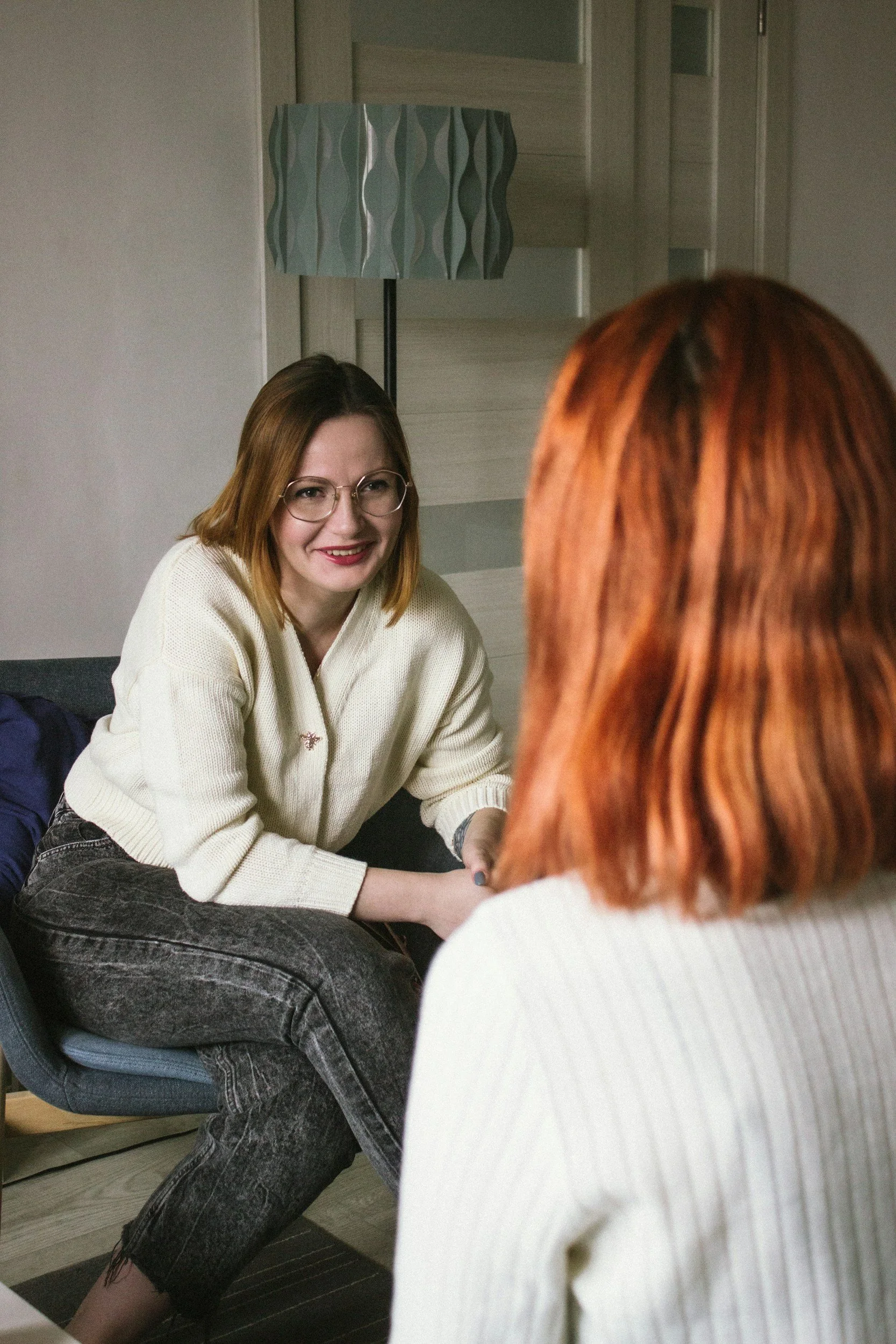
And a small, honest reframe our clients tend to remember. Clarity mostly comes after the choice, not before it. Waiting to feel certain is usually waiting forever. Our therapists work with anxiety, self-criticism, and the patterns that keep people feeling stuck, with therapy services in person in Philadelphia and West Chester and online in many states. No one will push you to decide anything, including this.
Why can't I make even small decisions without anxiety?
Because your decision system is running on fear and fatigue, not importance. When anxiety is high or your energy is spent, a lunch order and a life choice hit the same overloaded circuit. Small-decision paralysis is usually a sign of an exhausted system, not a broken person.
What if I make the wrong choice?
Then you will do what humans do: feel it, adjust, and keep going, which is survivable in a way your anxiety does not believe yet. There is no version of your life where you never get anything wrong. The real choice is between a life with some wrong turns and a life spent idling at the intersection.
I feel stuck in my life but don't know what I want. Is that normal?
Very, and often "I don't know what I want" is more accurately "I know, and it is inconvenient." Wanting something that would disappoint someone, cost an identity, or require a scary change tends to disguise itself as confusion. Gentle, honest attention (sometimes with a therapist, sometimes with a journal) usually finds the wanting underneath.
How do I stop overthinking every decision?
Start by noticing when research turns into re-reading, because that is the moment thinking has become soothing. Then shrink the decision: give small choices a time limit, and remind yourself that most decisions are reversible experiments, not verdicts. The deeper work is building self-trust, which is exactly the kind of thing some people find helpful to work on with someone.
Is decision paralysis a symptom of anxiety or something else?
It travels with several things: anxiety and perfectionism most often, but also depression (where everything costs too much energy), ADHD (where initiating any task, including choosing, is genuinely harder), and old experiences that taught you your judgment was not safe to use. A therapist can help you figure out which combination is yours, because the way out differs.
Does therapy actually help with feeling stuck?
Yes, and not by handing you answers. Therapy helps by changing your relationship to choosing: less verdict and more experiment; less "What is wrong with me?" and more "What am I protecting?" Most people do not need to be told what to do. They need to stop being afraid of their own voice, and that is very workable.
Choose Anyway

If you have read this far, there is probably one specific decision sitting in your chest right now, the one that has been pending so long it has started to feel like furniture. We want to say something about it, gently: the fact that it is still open does not mean you have failed. It means it matters to you and that you have been trying to protect yourself the only way you knew.
But you deserve better than a life spent in the waiting room of your own decisions. You are allowed to choose imperfectly. You are allowed to close a door and grieve it and still be glad you moved. You are allowed to find out, the way everyone finds out, by choosing and then living the answer.
We are here if you ever want company for that, no pressure, no timeline. And in the meantime, one small experiment: pick one tiny pending decision this week, the couch, the restaurant, or the email, and decide it badly on purpose if you have to. Notice that the sky holds. That noticing is the beginning of the whole thing.