
ADHD at Work and in Love: Beyond the Stereotypes
Written by Jennifer Chaiken, LMFT | Published September 2026 | The Therapy Group

Here is the direct answer to the question underneath this post: yes, ADHD in adults is real. It does not look like the fidgety-kid stereotype, and the places it shows up most are exactly the places that matter most: your work and your relationships. Adult ADHD is a difference in how the brain handles attention, time, emotion, and motivation, which means it touches deadlines and dishes, meetings and marriages, feedback at work, and bids for connection at home. And because it hides so well behind words like "lazy," "scattered," or "too sensitive," many adults spend decades blaming their character for what was always their wiring.
October is ADHD Awareness Month, so let's have the grown-up version of this conversation. And if you are here because those ADHD TikToks have been hitting a little too close to home lately, welcome. The Therapy Group is here to help… because we believe that while the algorithm is not a clinician, it is sometimes an excellent front door.
Why am I only figuring this out as an adult?
Because ADHD does not appear in adulthood, it just finally runs out of places to hide. Through school and early jobs, many people cope on raw intelligence, deadline panic, and parents or partners who quietly hold the structure. Then adult life removes the scaffolding: nobody assigns the homework anymore, and suddenly you are the one who has to remember the appointments, the anniversaries, the milk, and the invoice from March.
This is especially true for people who fly under the radar: the daydreamers rather than the disruptors, the ones who got "so much potential" on every report card. Many adults, women especially, only recognize themselves when a child gets diagnosed or a video essay describes their inner life with unsettling accuracy. If that recognition has been building in you, it is worth taking seriously. We wrote a full introduction to adult ADHD, from testing to therapy, and formal ADHD testing can turn a suspicion into a map.
What does ADHD actually look like at work?
It looks like a brilliant employee with a messy relationship to time, and the gap between the two confuses everyone, including you. ADHD at work is reading the same email four times while your mind replays a conversation from Tuesday. It is the report you could not start for three weeks and then finished, beautifully, in one feral midnight sprint. It is thriving in the crisis and drowning in the follow-up, interrupting in meetings not from rudeness but because the thought will evaporate if you wait, and a desk that looks like an archaeological dig of half-finished systems.
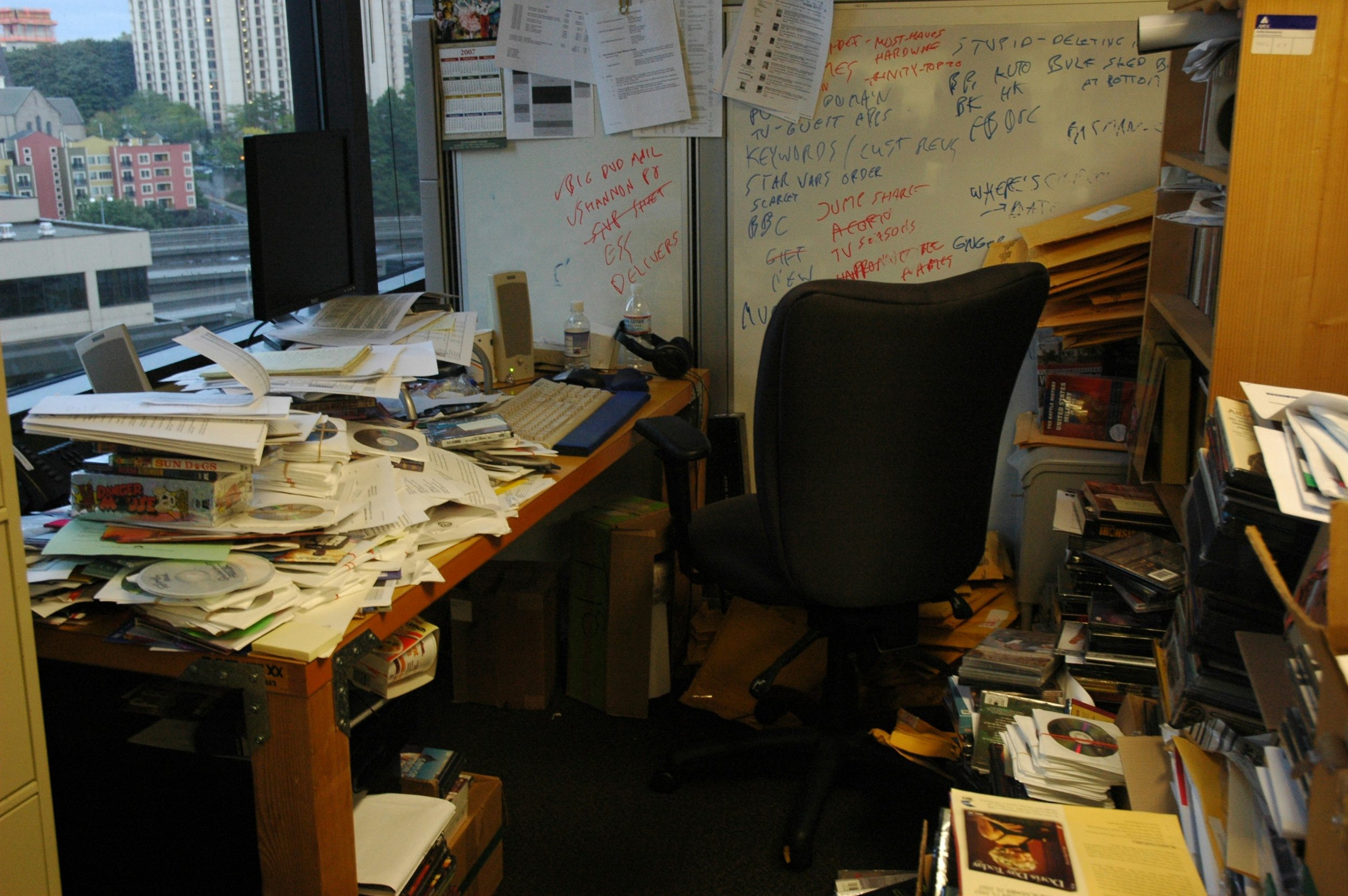
The cruelest part is the inconsistency. You hyperfocus for six hours on the interesting problem, so everyone knows you can focus, which becomes the evidence used against you: "You did it before, so clearly you just don't care about this." A brain that struggles to start is not a person who doesn't care. Motivation in an ADHD brain runs on interest, novelty, urgency, and challenge, not on importance. That is neurology, not ethics.
What is rejection-sensitive dysphoria?
Rejection-sensitive dysphoria, or RSD, is the experience of feeling perceived criticism or rejection as sudden, physical, disproportionate pain, and it may be one of the most life-shaping and least talked about parts of ADHD. The term (coined by ADHD researcher Dr. William Dodson) is not a formal diagnosis, but ask a room of ADHD adults about it and watch the hands go up. RSD is why a two-line email can ruin a whole afternoon. It is the "can we talk?" text that turns your stomach to ice, the joke about your lateness that you will think about for a year, and the promotion you never applied for because a no would have been unbearable.
RSD matters at work, where feedback is constant and every performance review can feel like a verdict on your soul. And it matters enormously in love, where the person whose opinion could hurt you most sleeps next to you. Many people with RSD become perfectionists or people pleasers to stay ahead of criticism, which works right up until it burns them down. If the pain has been running the show, working with a therapist on anxiety and self-worth can genuinely change what feedback feels like in your body.
How does ADHD show up in relationships?
ADHD shows up in love as a painful translation problem: what feels like distraction on the inside reads as indifference on the outside. Forgetting the milk is not the same as forgetting you matter. ADHD brains lose the milk. They do not lose the love. But a partner who has asked three times, who watches you hyperfocus on a hobby while the errand evaporates, cannot see the difference from where they stand. Over time, a hard pattern can form: one partner slides into managing (reminding, planning, tracking everything) and starts to feel like a parent, while the ADHD partner feels monitored and criticized and starts to feel like a child. Nobody signed up for either role, and both people are lonely inside it.

Add RSD to the mix, and small conflicts get big fast: one partner raises a concern, the other hears catastrophe, and the conversation that needed five calm minutes becomes a shutdown or a blowup. If the same fight keeps circling back, our post on why couples keep having the same argument will feel familiar. The repair is real, though: couples therapy that understands ADHD helps both partners stop reading character into wiring, rebuild the roles so nobody is the hall monitor, and design systems the relationship runs on so memory stops being a loyalty test.
Is it my ADHD or is it me?
Both are you, and that is actually the hopeful answer. ADHD is not a personality flaw grafted onto an otherwise finished person; it is part of how your particular brain does life, tangled up with everything else that makes you who you are. The useful move is not to blame everything on ADHD or nothing on it, but to get curious about which struggles are wiring, which are habits built to survive the wiring, and which are old shame doing an impression of the truth.
That sorting is tender work, because most ADHD adults arrive carrying decades of accumulated verdicts: careless, flaky, too much, not enough. In individual therapy, a lot of the early work is grief and un-blaming, looking back at the missed deadlines and the strained relationships and retelling that story with the missing information included. You were not failing to try. You were trying extraordinarily hard, without the manual.
What are the strengths nobody mentions?
The same brain that loses its keys can find connections nobody else sees, and any honest conversation about ADHD has to include this half. ADHD adults are often the idea people: divergent thinkers who link things across categories, improvise brilliantly when plans collapse, and bring an intensity of interest that can light up a room, a project, or a person. Hyperfocus, pointed at the right target, is a superpower with terrible aim. Many ADHD adults are also deeply empathic and emotionally attuned; the same sensitivity that makes rejection agonizing makes attunement effortless.
None of this cancels the hard parts, and toxic positivity ("ADHD is just a gift!") erases real struggle. But the goal of support was never to sand you down into someone else. It is to build enough structure that your actual strengths stop being buried under the logistics.

What supports actually help?
The supports that work share one principle: stop trying to fix the brain with willpower and start building an environment the brain can succeed in. At work, that looks like externalizing everything (one trusted capture system, not seventeen), body doubling, breaking start-resistant tasks into insultingly small first steps, and, where you can, shaping the role toward interest and sprint-style work. In love, it looks like shared external systems (a family calendar that is the memory, so a person doesn't have to be), agreed repair plans for RSD moments, and appreciation said out loud, because ADHD partners often hear the misses and rarely the record of hits.
And professionally: therapy that actually understands ADHD, whether that is individual work on shame and systems, couples work on the pattern, or testing that gives you clarity and documentation. At The Therapy Group, we match every client with a therapist based on connection and fit, in person in Philadelphia and West Chester or online in many states, and several of our therapists work with ADHD across exactly these territories: work stress, relationships, self-worth.
Frequently asked questions
I saw myself in an ADHD TikTok. Does that mean I have ADHD?
It means you saw something worth exploring, and that is not nothing. Social media compresses ADHD into its most relatable fragments, which is why it resonates so widely, including with people who do not have ADHD. The difference is pattern and impairment: lifelong, showing up across work and home and love, costing you things you care about. A real evaluation can tell you which one you are looking at.
Can ADHD really affect my relationships that much?
Yes, and research on ADHD and relationships consistently says so; ADHD-affected couples report more conflict and more of the parent-child dynamic than other couples. The encouraging half of the research: when ADHD is named, treated, and worked with (rather than argued about), those relationships do markedly better. The problem was never that someone did not love enough.
Is rejection-sensitive dysphoria an official diagnosis?
No. RSD is not in the DSM, and you will not be formally diagnosed with it. It is a widely used clinical description of a very real experience many ADHD adults report: rejection and criticism landing as disproportionate, physical pain. "Unofficial" does not mean "unimportant"; naming it is often the first relief.
Should I tell my boss I have ADHD?
It depends, and you get to be strategic. Some people disclose formally to access accommodations; others just ask for specific supports ("I do my best work with written follow-ups after meetings") without naming a diagnosis. A therapist can help you think through your workplace, your risks, and your script. There is no single right answer, only the right answer for your situation.
My partner has ADHD, and I am exhausted. Am I allowed to say that?
Yes, and saying it might save the relationship. The non-ADHD partner's exhaustion is real, and it deserves care, not a lecture about neurodiversity. Couples work helps here precisely because both things are true: your partner is not broken, and you cannot keep being the only working memory in the house. Better systems and repaired roles help both of you.
Do I need a diagnosis before starting therapy?
No. You can start therapy on the strength of your lived experience alone, and many clients do while they decide about testing. Testing adds clarity, documentation for accommodations, and often profound relief. Therapy adds the day-to-day work of building a life that fits your brain. They pair well, in either order.
If you’ve read this far…

If you have read this far with seventeen tabs open and a cold cup of something nearby, we see you, and we want to leave you with the sentence that changes things for so many of the adults we work with: you were never lazy. You were running a different operating system without the manual in rooms built for other machines, and you still got this far. That is not a deficit story. That is endurance.
So this October, in honor of ADHD Awareness Month, maybe the awareness that matters most is your own: of what has actually been happening all these years, of what the struggle cost you, and of how differently work and love can feel with the right support and the right systems. You do not have to white-knuckle another decade.
We are here when you want company for it, whether that starts with testing, therapy, or one honest conversation. No pressure, no timeline. And if a certain corner of TikTok sent you: stay for the part the videos leave out, which is that this gets so much better with help.