
Why Do My Partner and I Keep Having the Same Argument?
Written by Jennifer Chaiken, LMFT | Published June 2026 | The Therapy Group

If you and your partner keep having the same argument over and over, you are not broken, and your relationship is not doomed. Recurring fights are one of the most ordinary, deeply human parts of sharing a life with someone, and they are one of the most common reasons people first look into couples therapy. Relationship researchers have found that the majority of conflict between committed partners centers on issues that come back again and again, the kind that never fully resolve. So if it feels like you are stuck on a loop, that does not mean something is wrong with you, with your partner, or with the love between you. It usually means you have bumped into one of the tender places where two whole people meet.
You probably know the moment well. It starts over something small (a tone of voice, a forgotten text, a sink full of dishes) and within minutes you are somewhere you have both stood a hundred times before. You can almost predict the next line. Let us slow that loop down and look at what is really happening underneath it, because once you can see it, it tends to lose some of its grip.
Yes, it is completely normal to keep having the same argument
If you take only one thing from this, let it be this: having the same fight repeatedly is normal, and it is not a sign that you chose the wrong person. In one of the most cited findings in relationship research, Drs. John and Julie Gottman discovered that around 69 percent of the conflict in committed relationships is what they call “perpetual,” meaning it grows out of lasting differences in personality, needs, or values rather than a problem with one tidy solution.
In plain terms, most couples are not arguing because something has gone wrong. They are arguing because they are two different people who care about different things, and some of those differences simply do not dissolve. This is one of the most common things people tell us in first sessions: “We keep circling back to the exact same thing.” You are in very good company. The goal was never to eliminate every disagreement; it is to stay close while you carry the ones that stay.
The fight is almost never about what the fight is about
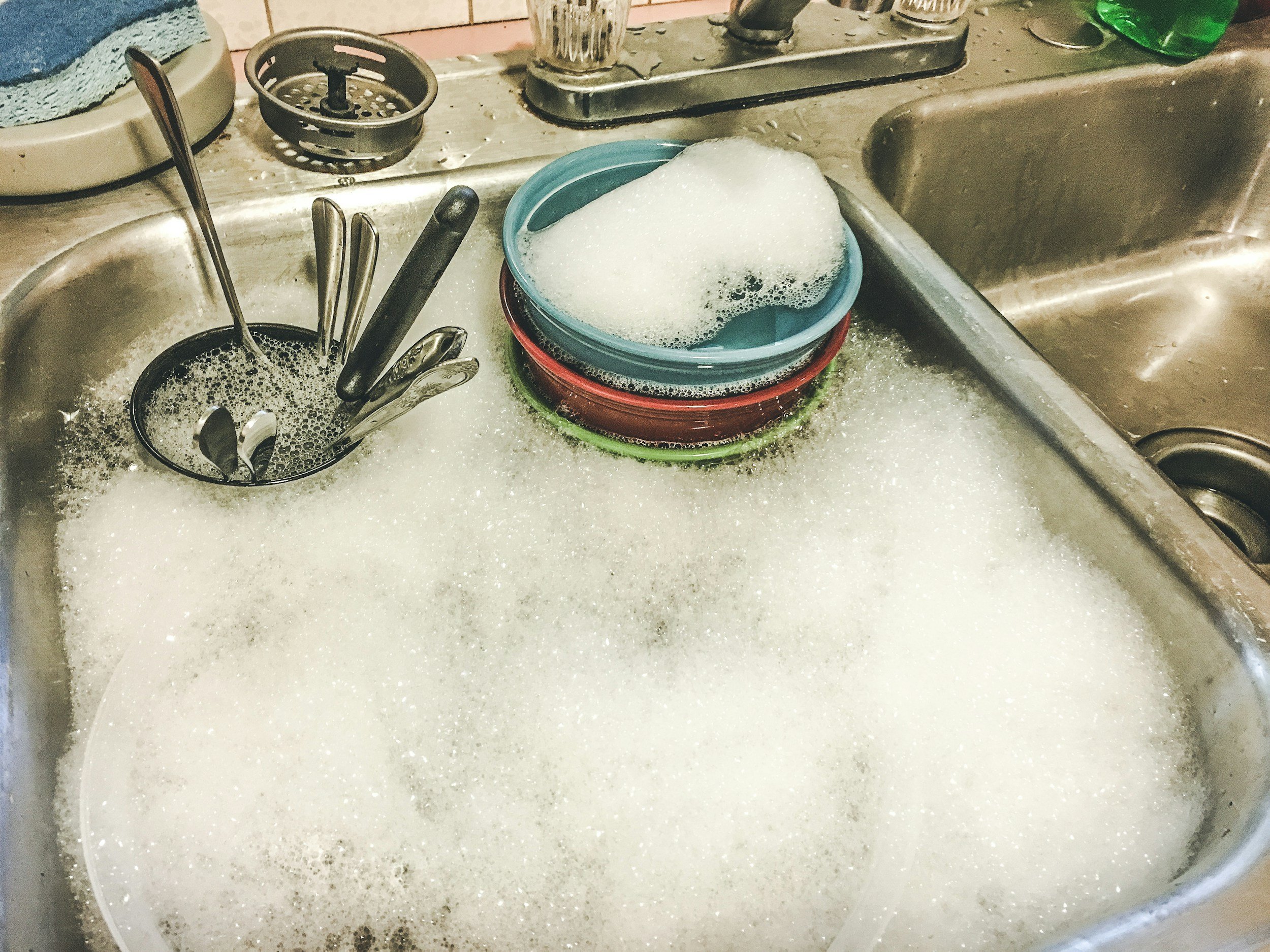
The argument on the surface is rarely the real argument. The dishes are not really about the dishes. The fight that looks like it is about being ten minutes late, or about money, or about whose turn it is, is usually carrying something heavier underneath: a quiet question like “Do I matter to you?” or “Can I count on you?” or “Do you see how hard I am trying?”
When your partner snaps about the dishes, part of what they may be saying is, “I feel alone in holding all of this.” When you go quiet instead of answering, part of what you may be saying is, “I feel like I can never get it right with you.” Two people can stand in the same kitchen having two completely different conversations, both of them aching, neither of them really about the plates. Naming the deeper need underneath the surface complaint is often where the loop finally starts to loosen.
Why the same argument keeps coming back
The same argument returns because it is anchored to something that matters deeply to each of you, and those things do not change just because you fought about them on Tuesday. Underneath most perpetual problems are unmet hopes or values: one partner craves security and the other craves freedom, one needs spontaneity and the other needs a plan. These are not flaws to be corrected; they are the shape of who you each are. Couples who learn to talk about the longing underneath the fight, rather than relitigating its surface again, tend to feel far closer, even when the difference itself never goes away.
How each of you learned to protect yourself

Most recurring arguments follow a predictable dance, and it usually has less to do with the topic than with how each of you protects yourself when you feel hurt. One very common pattern: one person moves toward the conflict, pressing for an answer or wanting to resolve it right now, while the other pulls back, going quiet or leaving the room to keep things from getting worse. The more one pursues, the more the other retreats, and the more the other retreats, the more the first pursues.
Neither response is wrong. They are old, well-practiced ways of staying safe, often learned long before this relationship ever began. For some, those patterns trace back to earlier wounds that still shape how we react today. When you start to recognize your own protective move, and your partner’s, the fight stops feeling like “you versus me” and starts to look like two nervous systems trying their best not to get hurt again.
What it feels like to live inside the loop
Living with a recurring argument is exhausting in a way that is hard to explain. It is not just the fights themselves. It is the bracing in between them. You might notice a tightness in your chest when you hear their car in the driveway, or a knot in your stomach when a certain topic comes up. You rehearse what you want to say in the shower and then never say it.

It can spill into the rest of your life, too. You are distracted at work, replaying last night’s conversation instead of the meeting in front of you. You lie awake at 11pm running the loop again. For some people this low hum of relationship stress starts to look and feel like ongoing anxiety: trouble sleeping, a short fuse, a sense of walking on eggshells in your own home. If that is where you are, please know it makes sense, and being tired from it is not weakness.
When the arguing slowly turns into distance
The real risk of a recurring fight is not the fight itself; it is what happens when couples give up on talking about it. When the same argument stays gridlocked for long enough, many people stop bringing it up at all. On the surface that can look like peace. Underneath, it is often the beginning of distance, two people quietly editing themselves, sharing a little less, reaching for each other a little less often.
This is the part worth paying attention to, gently. Imagine, for a moment, what it would feel like to talk about the hard thing and come out the other side still feeling like a team, to go to bed without the wall between you. That closeness is often more reachable than it feels from inside the loop. The couples who find their way back are usually not the ones who stopped disagreeing; they are the ones who found a way to stay in the conversation.
How to tell if it is time to talk to someone

Here is a simple way to think about it: you do not have to be in crisis to deserve support, and you do not have to wait until things feel unbearable. If the same argument keeps coming back, if you feel more like roommates than partners, or if you find yourselves avoiding whole topics to keep the peace, those are reasonable signals that an outside perspective could help.
It makes complete sense if reaching out feels like a big step. Most people sit with the idea for a long while before they do anything about it, and choosing to look into couples therapy is not an admission that your relationship has failed. If anything, it is the opposite. It is two people deciding that what they have is worth understanding better. Some couples come in during a hard season; others come in simply because they want to stop having the same conversation and start having a different one.
What actually shifts when you talk it through with someone
When couples begin couples therapy, the surprising thing is usually not that they learn to win the argument. It is that the argument starts to matter less, because they finally understand what it was protecting. A good couples therapist does not pick a side. Instead, they help you both slow the loop down enough to see the deeper needs underneath it, and to hear each other in a way the heat of the moment rarely allows.
At The Therapy Group, our licensed therapists draw on evidence-based approaches grounded in decades of research on what keeps couples connected. We will be honest: this work is not always comfortable, and the first session can feel awkward. Sometimes the first therapist is not the right fit, and that is okay too. For couples with busy or far-apart schedules, online therapy makes it easier to do this work from home. What tends to change is not that the differences vanish, but that the two of you stop being on opposite sides of them.
What if you are the only one who feels ready

If your partner is not on board yet, you are not stuck. You can begin with yourself. A lot of meaningful change in a relationship starts with one person getting curious about their own part of the pattern, their own triggers, their own protective moves. Individual therapy can be a powerful place to do exactly that, and it often shifts the dynamic between you even before your partner ever walks through a door.
Wanting things to be better, even when you are the only one saying it out loud right now, is not a small thing. You can explore the full range of therapy services at your own pace, with no pressure to decide anything today.
Frequently Asked Questions
Is it normal for couples to argue about the same thing over and over?
Yes, it is very normal, and far more common than most people realize. Relationship research suggests the majority of conflict between committed partners is recurring by nature, rooted in lasting differences rather than solvable problems. The repetition is not a sign of failure. It is a sign that something important to one or both of you keeps getting touched.
We love each other but keep having the same fight. Does that mean we are not compatible?
No, recurring fights are not proof of incompatibility. Loving someone and bumping into the same friction almost always go together. Compatibility is less about never disagreeing and more about whether you can stay connected through the disagreements that do not fully go away.

How do I know if we need couples therapy or if this is just a rough patch?
A helpful sign is repetition: if the same argument keeps returning, if you are avoiding topics to keep the peace, or if you feel more distant than you used to, those are reasonable reasons to reach out. You do not need to be in crisis to benefit. Many couples come to couples therapy simply because they are tired of the loop and want a different conversation.
Can couples therapy actually help if we have been stuck on this for years?
Yes, and being stuck for a long time does not mean it is too late. Long-standing patterns often shift once both people can finally see what the fight has been protecting. Every relationship moves through different phases, and what worked in one season often needs to be revisited in the next. The work is not about erasing the difference between you; it is about learning to carry it together without losing your closeness.
My partner does not want to go to therapy. What can I do?
Start with yourself, and know that this is a more common starting point than you might think. Individual therapy can help you understand your own part of the pattern, and that alone often changes the dynamic between you. It also helps to share gently that a good couples therapist does not take sides or put anyone on trial, since that fear holds many partners back. The room is for the relationship, not against either person.
A gentle note to end on

If you read this far, it is probably because some part of this felt familiar. Maybe you recognized your own kitchen, your own predictable next line, the quiet ache underneath the noise. Take a breath.
The fact that you are trying to understand what keeps happening between you and someone you love is not a sign that things are falling apart. It is a sign of how much you care, and caring is the part that cannot be taught.
If you and your partner are ready to stop circling the same conversation and start having a different one, schedule your
free 15-minute consultation with The Therapy Group today.