
Befriending the Feelings You’d Rather Avoid
Written by Emmalee Bierly, LMFT | Published November 2026 | The Therapy Group
You can get very good at avoiding the feelings you do not want. You stay busy. You scroll. You keep the day full enough that nothing has room to surface, and you tell yourself you are fine, mostly because you do not have time not to be. It is a skill, and like most skills, you built it for a reason.
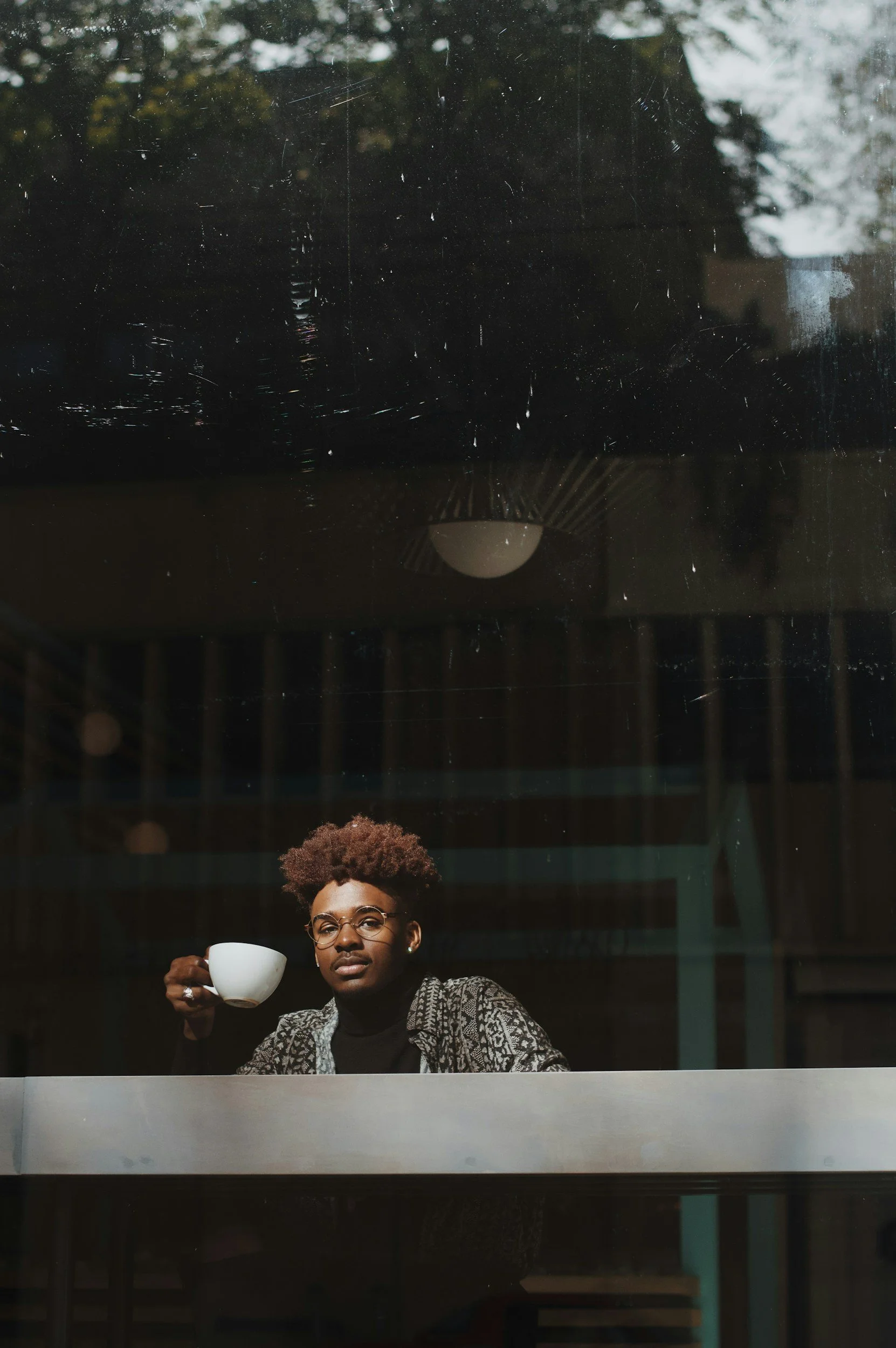
Here is the catch. The feelings you are an expert at avoiding tend to wait for you anyway. They do not expire because you stopped looking at them. And this time of year has a way of lowering the volume on everything else, so what you have been outrunning finally catches up. As the days get shorter and the light goes thin, a lot of people notice a sadness, a restlessness, or a low hum of anxiety that was easier to ignore in July. If that is you right now, you are not doing fall wrong. You are just a little quieter, and in the quiet, the feelings can finally be heard.
This is about why we avoid our emotions, why avoidance tends to cost more than it saves, and how to begin sitting with a hard feeling without being swallowed by it. Gently. At your own pace.
You do not have to turn toward the hard feelings alone. We’re here when you’re ready.
Why We Avoid Emotions in the First Place
We avoid emotions because, at some point, avoiding them helped. This is worth saying plainly, because most people treat their avoidance as a character flaw. It is not. It is a strategy, and it was usually a smart one.
Maybe you learned early that some feelings were not welcome in your home, that sadness got dismissed or anger got punished, so you learned to set them aside quickly and keep the peace. Maybe you simply had too much to carry and no time to feel it, so you became efficient instead. The mind is resourceful. When a feeling seems too big, too dangerous, or too inconvenient, it finds a side door: distraction, overwork, food, a drink, a scroll, a plan. None of that makes you weak. It makes you someone who found a way through.
Avoidance also wears convincing disguises. It can look like high-functioning anxiety, a life so productive that no one, including you, would call it avoidance. It can look like replaying a conversation for the tenth time, which feels like processing but is often a way of staying in your head so you do not have to feel what is in your body. The pattern is clever precisely because it does not look like running.
How Avoidance Quietly Backfires
Avoiding a feeling does not delete it. It stores it. And stored feelings do not sit politely in a drawer; they leak, they build pressure, and they tend to come out sideways.
In the short term, pushing an emotion down works so well that it teaches you to do it again. In the longer term, the cost shows up elsewhere. Suppressed feelings can surface as a short fuse over something small, as trouble sleeping, as a stomach that is always a little tense, or as a numbness that spreads until the good feelings dim too. You cannot selectively mute just the hard emotions; turn the dial down on grief and anxiety, and joy gets quieter in the same motion. For some people that flattening becomes numb or strangely flat, a kind of going through the motions. For others it looks a lot like burnout, an exhaustion that rest alone does not fix.

There is a well-known finding from psychology research that many people, left alone in a room with nothing but their own thoughts, would rather give themselves a mild electric shock than simply sit there. Whether or not the exact numbers hold up, the point lands: being with our inner experience can feel so uncomfortable that we will choose almost anything else. That is not a personal failing. It is how common and how human avoidance really is.
Why Feeling Is the Thing That Lets It Move
The way out of a feeling is usually through it. This sounds like a slogan, but there is a real mechanism underneath it. An emotion is partly a set of sensations in the body: a tightness, a heat, a heaviness, a wave. When you let yourself actually feel those sensations, without narrating a story about them or shoving them away, they tend to rise, crest, and pass, often faster than you expect. Feelings are designed to move. Avoidance is what keeps them stuck.
Sitting with an emotion does not mean drowning in it. It does not mean you have to understand it, justify it, or do anything about it. It means letting it exist in your body for a moment without immediately reaching for the exit. You are not trying to feel worse. You are trying to stop spending so much energy holding the door shut.
This is also where the body matters as much as the mind. Because emotions live in sensation, breath and gentle movement are often the most direct way in. A slow exhale, feet flat on the floor, a hand on the chest: these tell your nervous system it is safe enough to let the feeling be here. That safety is what makes feeling possible in the first place.
Building Distress Tolerance, One Small Rep at a Time
Distress tolerance is the capacity to feel something hard and stay with yourself anyway, and like any capacity, it grows with practice. You do not build it by white-knuckling through your worst feeling on your worst day. You build it in small, survivable reps.

A few ways to start. When a feeling rises, try naming it: "This is sadness," or "This is anxiety." Naming a feeling gives the thinking part of your brain something to do and takes a surprising amount of heat out of it. Then see if you can locate it in your body and just describe it to yourself, the way you would describe weather: tight, warm, fluttery, heavy. Set a small container around it if you need one, even sixty seconds of allowing the feeling before you move on counts and counts a lot. You can steady yourself while you do this: slow your exhale, feel your feet, hold something warm. The goal is not to feel the feeling perfectly. It is to learn, in your body, that you can feel it and still be okay.
Go slowly, and expect it to be uneven. Some days you will make room for a feeling with real tenderness. Other days you will reach for the usual distraction before you even notice, and that is fine. Avoidance took years to build; a different relationship with your emotions is built the same way, one small moment at a time. Slow counts here too.
When It Helps to Have Company for This
You can practice all of this on your own, and for many people, some company makes it easier, especially when the feelings underneath are old or tender. Learning to sit with emotions inside a safe relationship is often where the deepest shifts happen, because so much of the original avoidance was learned in relationship too.
If your avoidance has a fearful, bracing quality, or if what is waiting underneath is connected to something painful from the past, it can help to work with a therapist who works with trauma. Approaches like EMDR are designed to help the nervous system process what it once had to store, so a feeling no longer registers as an emergency. More often, this is everyday work that happens in individual therapy, where you get to practice feeling things at a pace your system can trust, with someone who does not flinch. You can read about our therapists whenever you feel curious, come into our Philadelphia or West Chester offices, or meet online from your own couch. There is no deadline on any of it.
Questions People Ask About Sitting With Hard Feelings
Is it bad to avoid your emotions?
Avoiding emotions is not bad or shameful; it is a normal coping strategy, and sometimes setting a feeling aside until you have the space for it is exactly the right call. It becomes a problem when avoidance is your only option, when feelings never get felt at all. Then they tend to resurface as anxiety, irritability, numbness, or physical tension. The goal is not to feel everything all the time. It is to have the choice.
Why do my feelings hit harder in the fall?
For many people, the season shift lowers the external noise. Shorter days, cooler weather, and quieter evenings leave more room for whatever you have been outrunning, and less daylight can affect mood directly. It makes sense that feelings you managed to stay ahead of in summer start knocking in October. It does not mean something is wrong with you; it often means you finally have the quiet to notice what was there all along.

How do I sit with a hard emotion without getting overwhelmed?
Start small and stay anchored. Name the feeling, find it in your body, and let it be there for a short, contained stretch, even a minute, while you slow your breath and feel your feet on the floor. You are not trying to force a breakthrough; you are showing your nervous system that the feeling is survivable. If it ever feels like too much, it is completely okay to step back and try again later, or to do this work with a therapist.
What is distress tolerance?
Distress tolerance is the ability to get through a painful emotion without making things worse and without needing it to disappear first. It is a core idea in approaches like DBT, and it is a skill, which means it can be learned and strengthened over time. Most people find it grows not through willpower but through repeated, gentle practice of staying with a feeling a little longer than they used to.
When should I talk to a therapist about this?
If avoiding your feelings is costing you sleep, focus, relationships, or your sense of aliveness, that is reason enough, and you do not need to wait until it gets worse. It is also worth reaching out if what is underneath feels too big to face alone or if it connects to something painful from your past. You do not have to be in crisis to deserve support.
What We Hope You Carry
If something in here landed, it might be because a feeling you have been managing just raised its hand. That can be tender, especially this time of year. Be gentle with the part of you that learned to look away; it was trying to protect you, and it did its job for a long time.
Here is what we hope you carry out of this. You are not fragile for having feelings you would rather not feel, and you are not failing when avoidance kicks in on its own. The feelings were never the enemy. They are information and energy and sometimes grief that has been waiting a long time to be witnessed. You are allowed to turn toward them slowly, with company, with breath, with as many small reps as it takes.
And if you would like someone alongside you while you learn to do that, the door is open whenever you are ready.