
Movember and Men's Mental Health: Breaking the Silence
Written by Jenifer Chaiken, LMFT | Published November 2026 | The Therapy Group

If the men in your life would never say they're struggling, here is the plainest truth we can offer at the start of Movember: their silence is not proof that they are fine. Men struggle at the same human rate as everyone else; they are simply trained, from early and from everywhere, to hide it better, and the hiding has real costs. This post is about breaking that silence, gently and practically: why it exists, what struggling actually looks like in men, why the stakes are high enough to warrant a whole month, and how a real conversation gets started, whether you are the one worried about him or the one behind the "I'm fine." And if you’d rather not wait until the end of this post and you or a man you know is ready to start the therapeutic journey, support is closer than you may think.
One thing before we start, because it belongs at the top of any honest post in this territory: if you or someone you love is in crisis, the 988 Suicide & Crisis Lifeline is there 24/7, by call or text at 988. It is for the person struggling and for the person worried about them.
What is Movember actually about?
Movember is the global men's health movement that turns November into a conversation about the things men don't talk about: mental health, suicide prevention, and prostate and testicular cancer. The moustaches are the famous part, and they are doing a specific job: a moustache in November is a walking conversation starter, a way for men to signal "this topic is allowed around me" without having to give a speech.
That design tells you something true about men's health in general. The moustache works because it starts the conversation sideways, through something visible and a little funny, rather than head-on. Keep that principle in your pocket; it comes back later in this post, because it is also how most real conversations with the men in your life will start.
Why do so many men suffer in silence?
Because most men were handed a rulebook before they could read: don't cry, toughen up, handle it, and other people have it worse. By adulthood the rules are so internalized they don't feel like rules anymore; they feel like personality. Add the practical layers (many men have never seen another man ask for help, and plenty worry that struggling openly would cost them standing at work or at home) and silence stops being a mystery. It is a strategy, learned honestly, that has simply outlived its usefulness.
The result shows up in the data every year: men seek mental health care at far lower rates than women, despite carrying comparable pain. Strong and silent was never a mental health plan. It was a costume, and a lot of good men have been wearing it so long it has started to fit like skin.

What does struggling actually look like in a man who won't say it?
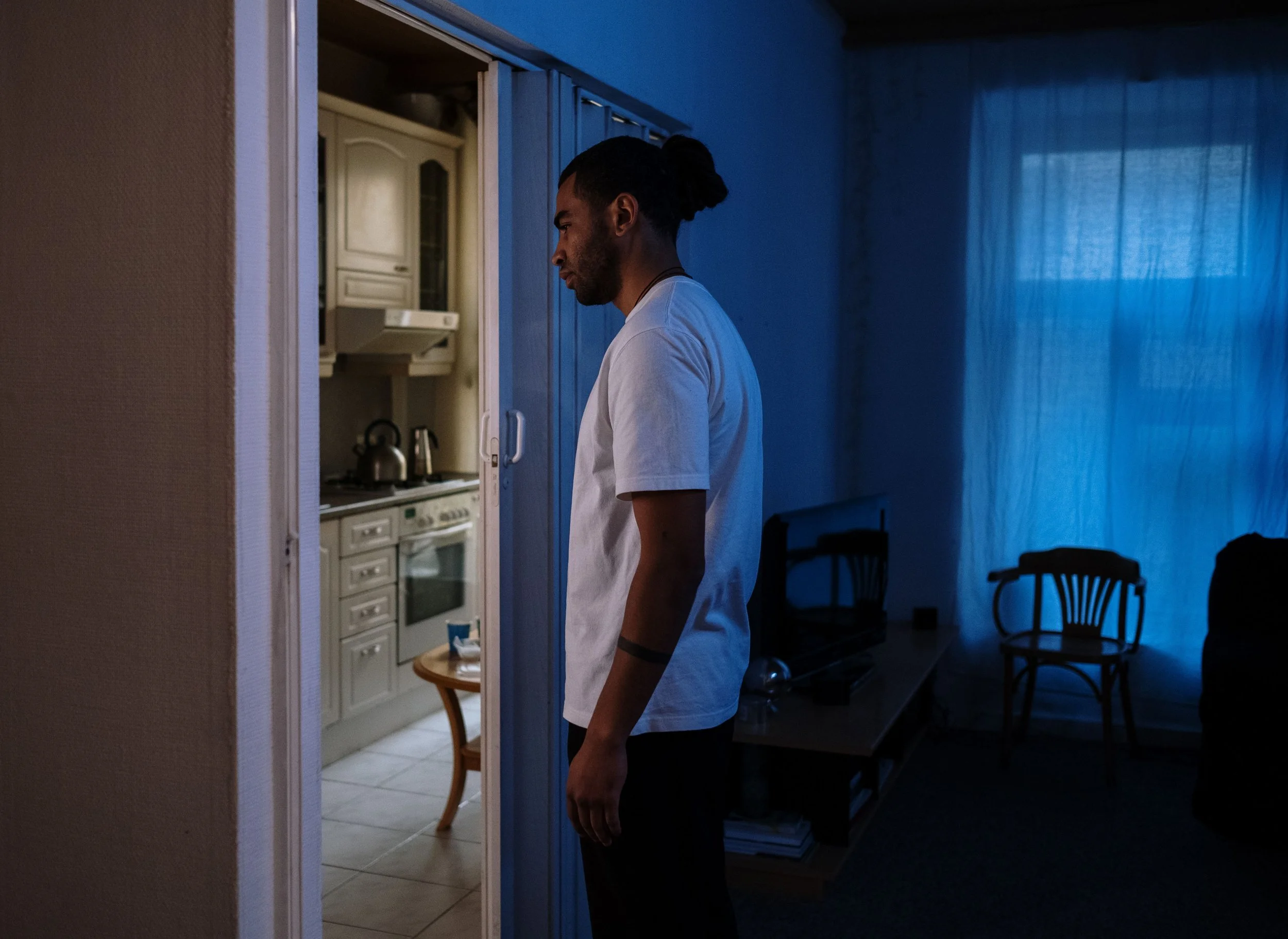
It rarely looks like sadness, which is exactly why it gets missed. Depression and anxiety in men often come out sideways: a shorter fuse, irritability that seems to arrive from nowhere. More hours at work, because busyness is the most socially rewarded hiding place there is. More drinks than usual, quieter than usual, "tired" as the answer to everything. The hobbies drop off one by one. The jokes get a little darker. He is present at dinner and somehow not there.
Most men don't say "I'm struggling." They say "I'm fine" in a tone that isn't. If a man you love has changed lately (angrier, flatter, drinking more, further away), consider that you may be looking at pain wearing its work clothes. Naming what you see, kindly and without a courtroom, is often the first crack in the silence.
Is male loneliness really that serious?
Yes, and it is one of the quietest health stories of the last decade. Study after study finds men's friendships thinning with age: fewer close friends than previous generations reported, fewer people to call on a bad night, sometimes no one at all who knows what is actually going on in their life. Many men's social worlds are organized around activity and logistics (the job, the league, the group text about the game), which can hold plenty of warmth while carrying almost no truth.
Male loneliness rarely looks lonely. It looks busy. A full calendar, a full inbox, a packed weekend, and no conversation anywhere in it that goes below the waterline. Loneliness is not a character flaw either; it is a health risk, linked to depression, anxiety, and worse physical outcomes, and it responds to the same medicine it always has: one real conversation at a time, with company that gets to see more than the highlight reel.
Why does Movember talk about suicide?
Because the numbers ask it to, and because saying them carefully is part of breaking the silence. In the United States and most of the world, men die by suicide at roughly four times the rate of women; Movember exists in large part because of that gap. We share this not to frighten anyone but for the opposite reason: risk that stays unspoken stays unaddressed, and this risk responds to connection, to conversation, and to treatment. Depression is treatable. Crisis passes with support. Men who reach out do better, and men reach out far more often when someone they trust opens the door first.
So here is what the number means practically. Checking on the men in your life is not dramatic; it is proportionate. Asking a man directly how he is really doing (including asking directly about suicide if you are worried; research is clear that the question does not plant the idea) is one of the most protective things a friend can do. Our full guide on how to support someone who's struggling walks through those conversations step by step. And the standing resource, once more: 988, by call or text, any hour.
How do I reach out to a man who won't open up?
Go shoulder to shoulder, not face to face. Decades of lived experience (and plenty of therapists) will tell you the same thing: many men talk best sideways, during something, when the eye contact is optional and the conversation has somewhere to hide. The car. The trail. The grill. The drive to the airport. Invitations to do something beat invitations to talk about something, and the talk usually shows up on its own once the doing starts. Men often talk sideways: in the car, on the trail, over the grill. The conversation counts anyway.
When the opening comes, keep it simple and specific: "You've seemed different lately. I'm not going anywhere. What's going on?" Expect a deflection or two, and stay; the second ask is often the one that lands. Skip the fixing, skip the pep talk, and do not let "I'm fine" close a conversation your gut says isn't finished. Checking on your strongest friend is not an insult. It is an honor, and somewhere under the deflection, he knows it.
What if I'm the man in this post?
Then let this section talk to you directly, without the pep-talk voice: you are allowed to be struggling, and you are allowed to say so before it becomes an emergency. The bar for reaching out is not "falling apart." It is "carrying more than feels right, for longer than feels right." If the fuse is shorter, the drinks are doing more work, the sleep is broken, or you have quietly stopped wanting things, that counts. It has always counted.
And a reframe worth stealing, because the old rulebook dies hard. Asking for help is not the opposite of strength. It is what strength does when it's tired. The same discipline that has carried you this far (showing up, doing hard things, handling it) is exactly what a first therapy session takes. Most men we see waited longer than they wish they had, and almost none of them can tell you, afterward, what they were protecting by waiting.

What does therapy look like for someone who hates talking about feelings?
More practical than you have been led to believe and far less like the movies. A good first session is closer to laying out a problem with someone competent than to lying on a couch narrating your childhood. Plenty of men do their best work in therapy that is concrete and skills-forward: understanding what is driving the short fuse, building tools for the 3am brain, and sorting work stress from home stress from the old stuff underneath, with approaches like CBT and ACT that treat therapy like training rather than confession. The feelings come up on their own schedule, sideways, the way they do in the car. That counts too.
At The Therapy Group, we match every client with a therapist based on connection and fit, which matters double here; the right fit for a first-time, skeptical, "I can't believe I'm doing this" client is something we take seriously, and several of our therapists work with exactly the territory this post covers: anxiety, depression, and the relational strain that silence puts on a partnership. Individual therapy is available in person in Philadelphia and West Chester and online in many states, which, for a lot of men is the difference between starting and not.
Breaking the silence starts smaller than you think
One conversation, this month. That is the whole assignment Movember is really asking of anyone. If you are the friend, the partner, the sister, the coworker: pick your man, pick a shoulder-to-shoulder setting, and ask the second question after "how are you" instead of accepting the first answer. If you are the man: send one text you have not been sending to a friend, a brother, or a therapist. It does not need to be eloquent. "Been carrying some stuff lately" is a complete sentence, and every man who has said some version of it can tell you what it cost, which is almost nothing, and what it changed, which is usually everything that came after.
The silence was never protecting anyone. It just looked like it was, from inside the costume.
The Therapy Group will be here when the conversation is ready to include a professional, matched on connection and fit, at whatever pace works. No pressure, no timeline. And any hour of any night this month or after: 988, by call or text. The door is open in both directions.